共用電錶定獨立電錶?計清楚長遠電費先決定Shared or dedicated meter? Do the long-term maths first
屋苑安裝充電樁,電費點計係兩條路。開頭平嗰條,長遠未必平;開頭貴嗰條,用得多反而抵。In an estate there are two billing routes. The cheaper one to set up isn't always cheaper to live with, and the pricier one wins if you charge a lot.
In a private estate, after approval, the second decision is: how does your charging get billed?
There are generally two routes.
Route one: the estate's shared meter, apportioned
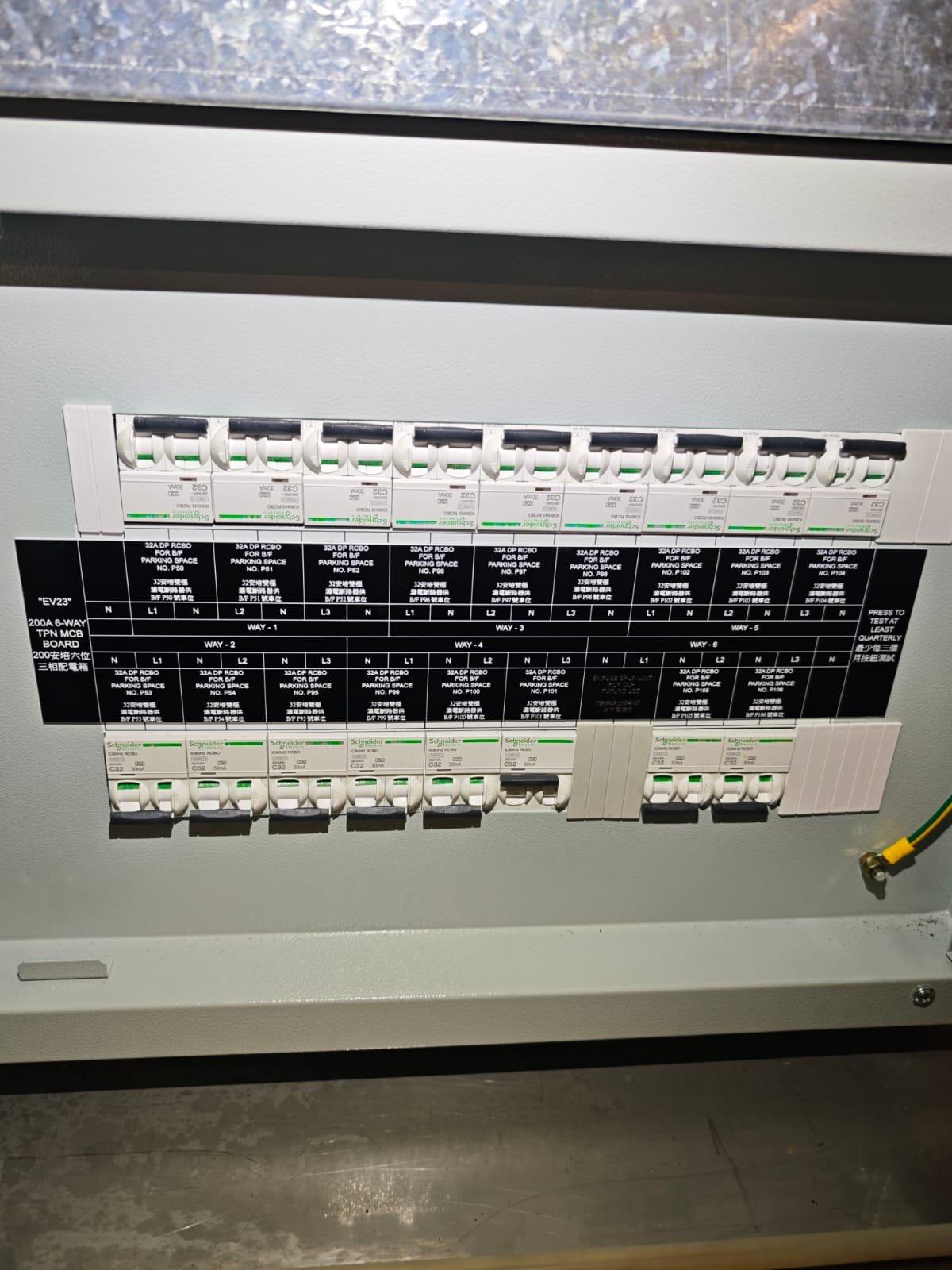
The charger connects to the carpark's existing common supply. The electricity lands on the estate's account, and your share is apportioned back to you.
Upsides
Lowest upfront cost — no new meter application, no space needed for one
Simplest process; management approval is usually enough
Shortest installation timeline
Watch for
The rate follows the estate's commercial or bulk tariff, which isn't necessarily the residential rate and is sometimes higher
You're relying on management's apportionment method. Is there a sub-meter? How often is it reconciled? What happens when it's wrong?
Some estates add a management or admin fee on top of the apportioned amount
If the estate changes its billing approach later, you have little say
Route two: your own meter, billed directly by the utility
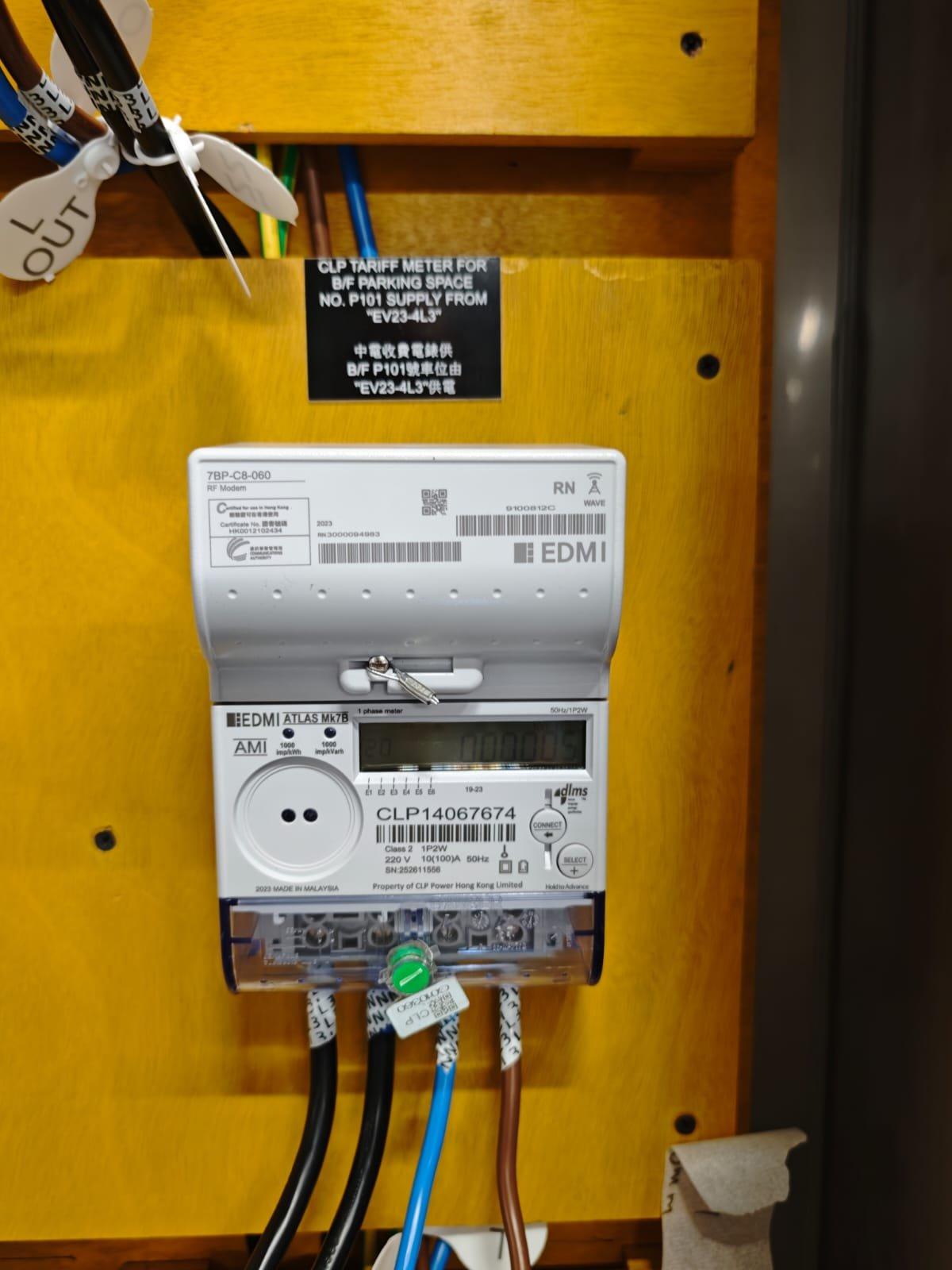
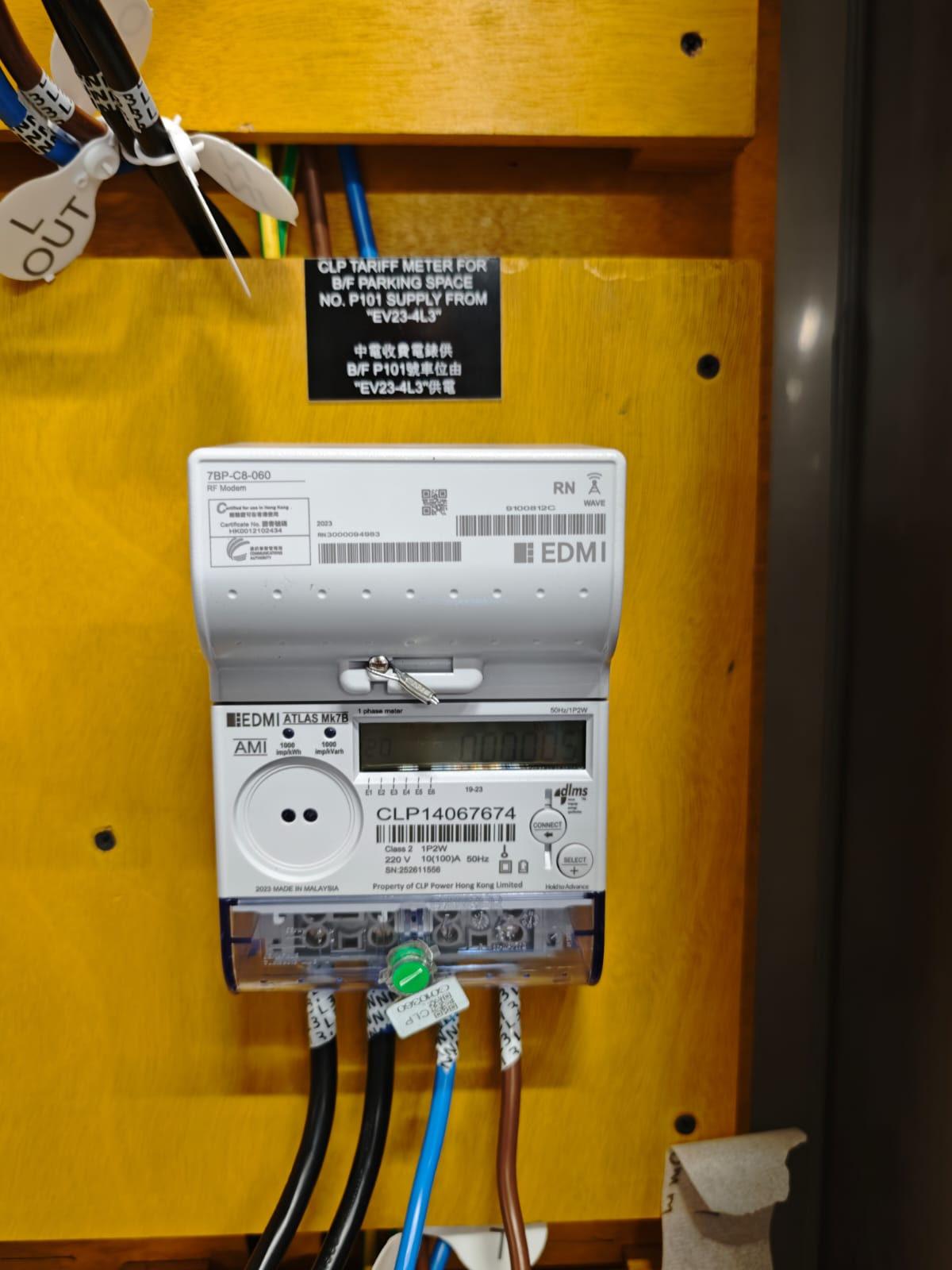
Apply to CLP or HK Electric for a meter of your own, installed in the carpark, with usage on your account.
Upsides
Transparent pricing straight from the utility's tariff, with your own bill
You pay for what you use, with no apportionment disputes
Potential access to residential-category rates and related concessions
Clean allocation of responsibility if you sell the flat later
Watch for
Higher upfront cost: application fee, meter box, and the run from the switch room to the meter position
The carpark needs somewhere to put the new meter, with management's agreement
Application and installation take longer
How to choose: use your consumption
A simple test: how many kWh a month do you charge?
Under 100 kWh/month (weekend driving, a few hundred km): the shared meter usually wins, because a dedicated meter's upfront cost takes too long to amortise.
Over 300 kWh/month (daily commuting, 2,000 km or more): the dedicated meter's rate advantage gradually overtakes the upfront cost and usually wins long-term.
In between: it depends on your estate's actual apportioned rate. Management has that number — it's worth asking.
There's also a non-financial factor: how much you value transparency. Some owners would rather pay a little more than argue about apportionment figures every month.
What we do about it
During the survey we do two things:
Ask management for the shared meter's actual apportioned rate and the calculation method
Cost the dedicated meter upfront, and work out the payback period at your expected usage
Then we put both numbers in front of you and you decide. We won't decide for you, because the answer genuinely varies from household to household.
Want a rough figure for both routes at your estate? WhatsApp us the estate name and roughly how many km you drive each month, and we'll estimate it.
有問題想查詢?Got a question?
不一定要幫襯才可以查詢。傳送你的情況給我們,我們一樣會回答。You don't have to be a customer to ask. Send us your situation and we'll answer anyway.