Type A + 6mA DC 漏電保護:一個唔可以慳的部件Type A + 6mA DC protection: the part you can't skip
電動車充電會產生直流漏電成分,普通漏電開關偵測唔到。呢個係最容易被慳、而客戶又最難察覺嘅一忽。EV charging can produce DC residual current that an ordinary RCD cannot see. It's the easiest corner to cut and the hardest for a customer to notice.
If you remember one thing from this article, make it this:
Residual current devices come in types, and one of those types can't protect EV charging.
It's the easiest component in the whole installation to leave out, and the one a customer has almost no way of noticing. It looks identical afterwards, the car charges fine, and the difference only shows up at the moment something goes wrong.
What residual current protection does
Normally the current going out and the current coming back are equal. If less comes back, some of it left by another path — through damaged insulation, or through a person.
An RCD measures that difference. When it exceeds the set value (typically 30mA domestically) it cuts the supply within tens of milliseconds. The 30mA figure isn't arbitrary; it sits below the threshold for ventricular fibrillation in a typical adult.
Where the problem is
RCDs come in types matched to the waveform of the leakage:
Type AC: detects sinusoidal AC leakage only. The cheapest and most common, and what a lot of older domestic installations use.
Type A: detects AC plus pulsating DC leakage.
Type B: detects everything including smooth DC. The most expensive.
While charging, rectifier circuits in the car can produce a DC leakage component. DC leakage has a nasty property:
Not only can a Type AC device fail to see it — it can saturate the device's magnetic core, so that the AC leakage it would normally catch stops being detected too.
So putting a charger that produces DC leakage behind a Type AC device can cost you your AC protection as well. That isn't "slightly weaker protection", it's "protection that may not work at all".
What's actually required
The standard for an EV charging circuit is:
Type A RCD (30mA) plus 6mA DC leakage detection
The 6mA DC part can come from:
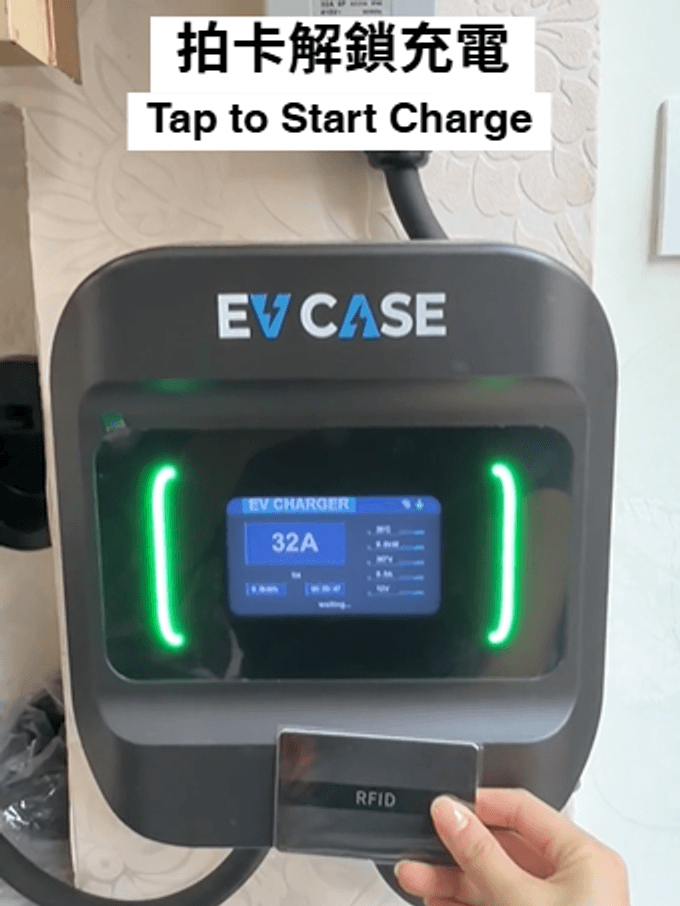
The charger itself (most compliant units include it, including the Wall Case 3 we fit), or
A separate RDC-DD device, or
A Type B RCD (costlier, and usually unnecessary domestically)
The common and sensible combination is Type A 30mA at the board, with 6mA DC detection built into the charger.
How to check yours
Two things you can do after installation:
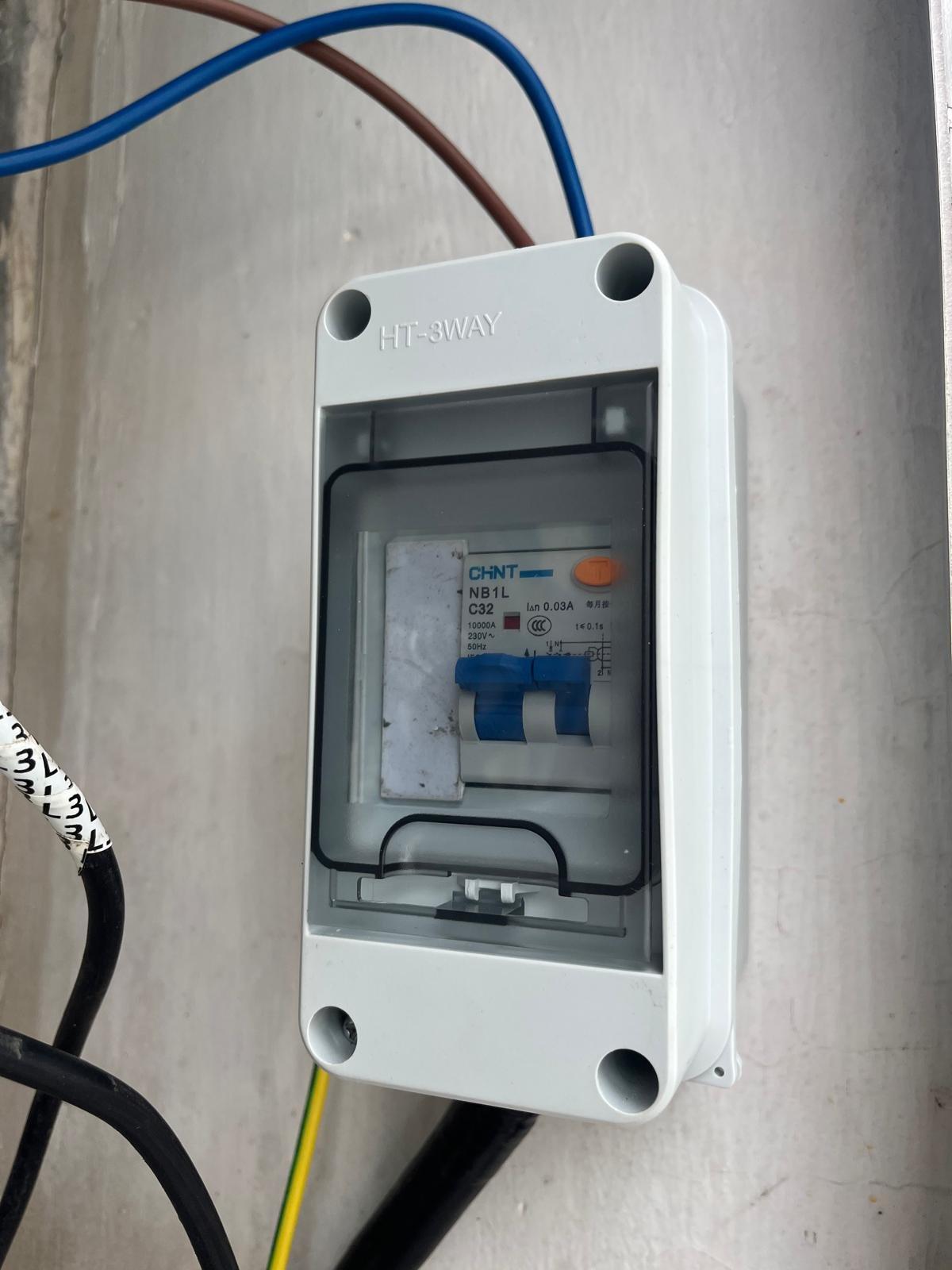
Look at the marking on the device. The faceplate carries a symbol:
A sine wave ∿ = Type AC
A sine wave plus a broken straight line = Type A
If your charging circuit is on a Type AC device, raise it.
Ask for the electrical test record. A compliant job ends with a signed record listing insulation resistance, earth resistance, RCD trip times and so on. No record is itself a signal.
Why this one gets its own article
Because the price difference is small, but it's the quietest possible corner to cut. Undersized cable you might spot. Sloppy routing you'd definitely spot. The wrong RCD type is invisible once the cover is on.
We don't offer a cheaper version without it. Not out of virtue — but because when this particular part matters, there's no second chance.
Unsure about an existing installation? WhatsApp us a photo of your distribution board and we'll tell you what type the device is. No charge, even if we didn't install it.
有問題想查詢?Got a question?
不一定要幫襯才可以查詢。傳送你的情況給我們,我們一樣會回答。You don't have to be a customer to ask. Send us your situation and we'll answer anyway.