村屋單相定三相?睇電錶箱就知你裝到 7kW 定 22kWSingle-phase or three-phase? For a village house, the meter box decides
22kW 三相要兩個條件同時成立:屋企有三相電,部車又收得到 22kW AC。兩個條件之中,第一個站在你家門外的電錶箱裏,行過去看一眼就有答案。Three-phase 22kW needs two things at once — three-phase at the house, and a car that can actually take 22kW AC. The first one is settled by the box on your outside wall.
Village house owners almost always get stuck in the same place: "should I fit 7kW or 22kW?"
There are two questions hiding in that one. The first is "how fast do I need to be" — we've answered that separately, working backwards from the hours you're parked, and the answer is usually 7kW: 7kW or 22kW? Most people don't need 22.
The second is "what can I actually have" — and that one is specific to village houses, because their supply arrangements vary far more than an estate's, and the answer is hanging on your outside wall. This article is about the second question.
Go and look at the meter box
No meter, no paperwork. Stand in front of the box and look at two things: how many conductors leave your meter, and what the meter is labelled.
A typical village meter cabinet. One single-phase meter per household, each with a single live and neutral, and one fuse carrier beneath it.
Single-phase looks like this: one live and one neutral out of the meter, usually a single fuse or single-pole switch below it, labelled 220V or 230V.
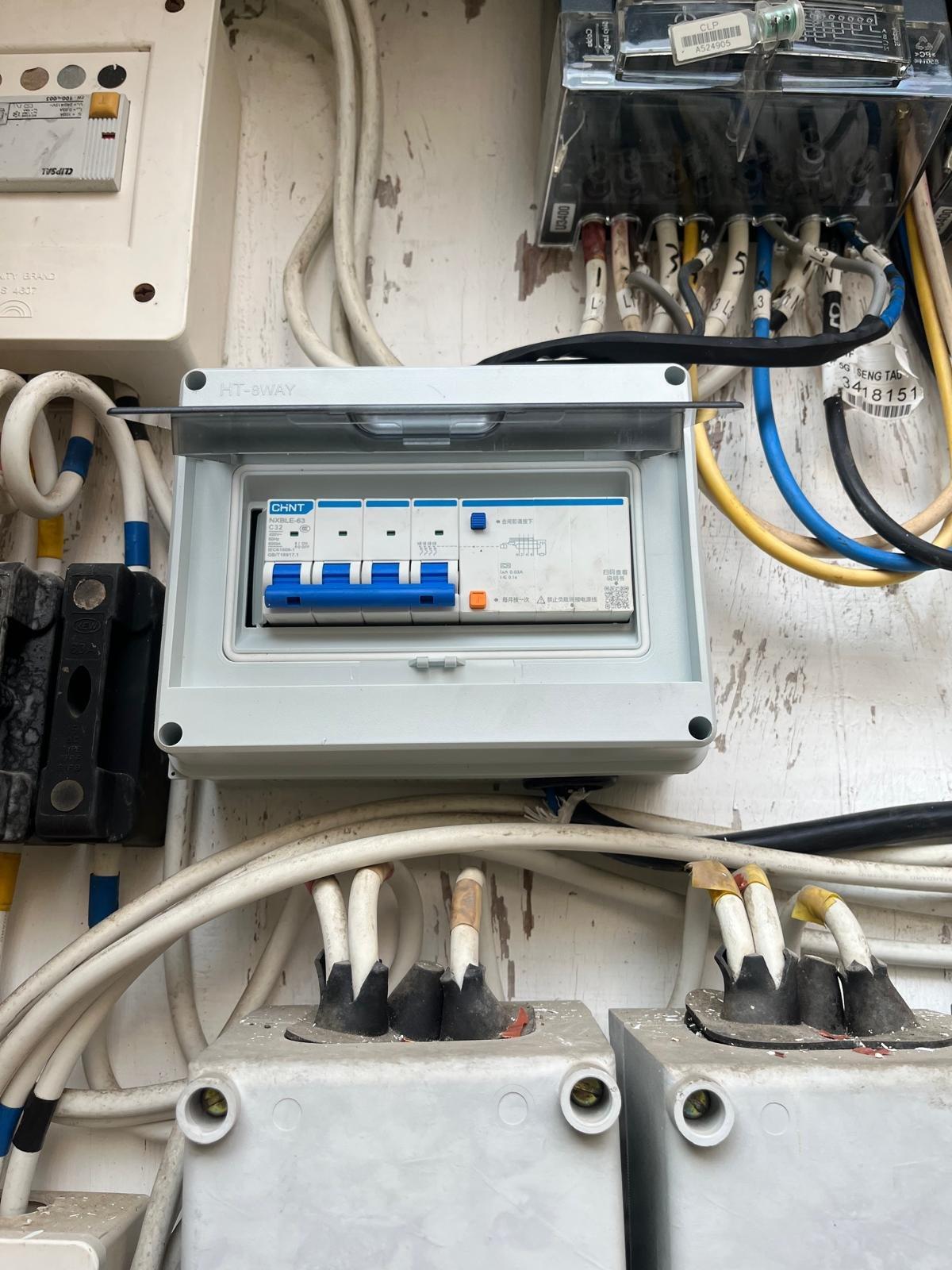
Three-phase is obvious once the door is open: three lives running separately, and fuse carriers and isolators appearing in groups rather than singly.
Three-phase looks like this: three lives and a neutral, with a row (three or four) of fuses and isolators behind the meter, labelled 380V or 400V.
One thing that catches people out: three-phase in the cabinet doesn't mean three-phase at your house. Village cabinets are often shared, and three separate single-phase meters sitting side by side look like three-phase from a distance. What matters is how many lives leave your meter.
What actually differs
7kW single-phase
22kW three-phase
Supply
Single-phase 220–230V
Three-phase 380–400V
Current
32A
32A × 3
60kWh battery, full
~8–10 hours
~3–4 hours
How common in village houses
Most already have it
Less common; usually an upgrade
Works involved
Relatively simple
May pull in a supply upgrade
Cars that support it
Nearly all EVs
Only some models
The second condition: can your car take it?
This is the step people skip. The car's on-board charger is the real ceiling. Fit a 22kW unit to a car whose OBC caps at 11kW and it draws 11kW — you paid for half a charger you can't use.
Models that genuinely support 22kW three-phase AC are a short list, and it's often an option rather than standard:
Renault Zoe (R110 / R135 with the Chameleon three-phase charger)
Smart #1 / #3 (some configurations)
Mercedes-Benz EQS / EQS SUV (22kW OBC at extra cost)
Audi e-tron / e-tron GT, Porsche Taycan (optional in some markets)
Lotus Eletre / Emeya, Maserati Folgore range (standard on some versions)
Polestar 4 Long Range, Zeekr 001 (some versions)
And the popular cars people ask about most, which mostly cap at 11kW or below:
Tesla Model 3 / Y / S / X (11kW in most markets)
BMW i4 / iX / i7 (usually 11kW)
Hyundai IONIQ 5 / Kia EV6 (mostly 11kW)
VW ID.3 / ID.4 / ID.5 / ID.7 (mostly 11kW)
BYD Atto 3 (7kW or 11kW in most recent markets)
Checking takes five minutes: the owner's manual or the manufacturer's spec sheet, under "maximum AC charging power", and note whether it says single- or three-phase. Five minutes that can save you thousands.
Three real situations
1. Overnight charging, under 100km a day
7kW single-phase. Ten hours parked at 7kW is about 70 kWh — more than most cars' whole battery. Simplest works, lowest cost, supported by nearly every EV.
2. You go back out during the day
Running a business, deliveries, school runs — home at midday for an hour and out again. That hour is about 7 kWh at 7kW against 22 kWh at 22kW. This is the one situation where 22kW genuinely wins, and it still depends on the car.
3. One bay, two EVs
Two cars sharing the supply doubles the demand and three-phase starts to make sense. But consider the other route: a three-phase supply can be split into two single-phase circuits, giving both cars 7kW at once for 14kW total — far more useful than one 22kW unit if both cars cap at 11kW anyway.
What upgrading to three-phase really involves
It isn't "pay more for a better unit". It's a separate project:
Apply to CLP or HK Electric for a three-phase supply and/or a higher approved load;
Have a registered electrical contractor submit the load calculation;
Possibly replace the supply cable, meter box and main switch;
Wait for the power company to fit the meter.
Allow two to three months, and budget for it separately. If the house needs the upgrade anyway because the overall load is short, the marginal cost of going three-phase at the same time is low. If it's purely to charge faster, go back and read situation 1.
The order of a village installation
Assessment — send photos or a video of the bay, the meter box and the cable route; a survey if it's complicated.
Decide the spec — 7kW, 11kW or 22kW, based on the existing supply and the car's OBC limit.
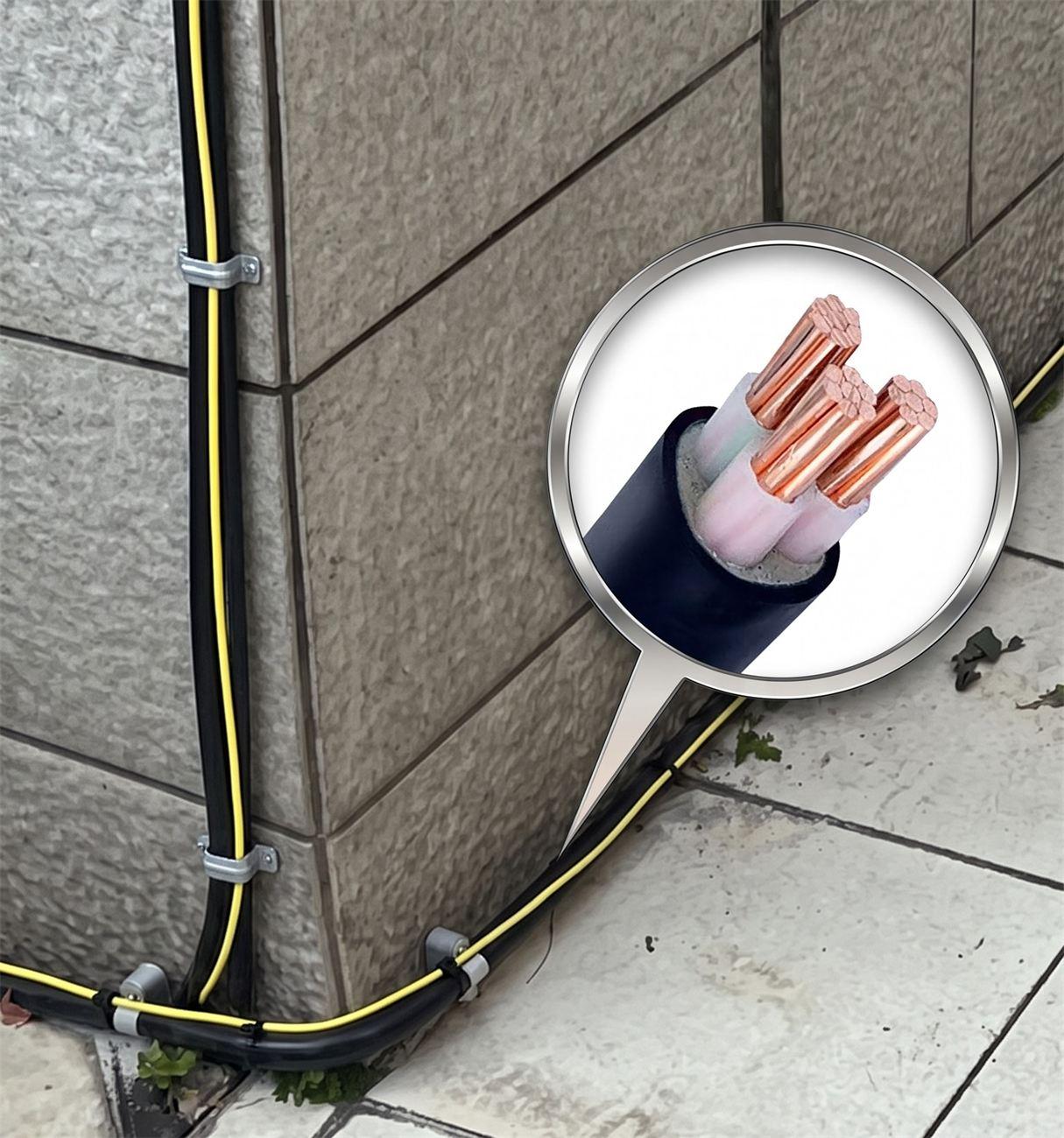
Cable route — outdoors, that means armoured cable or PVC conduit; we compare them here.
Install and test — installed and tested by a registered electrical worker, with a WR1 certificate issued.
Meter fitted, charging starts.
Installed pricing for village houses, what it covers, and the extra for a dedicated meter are all on the price list; the full procedure is on the village and detached house page.
In one line
Count the lives at your meter, then check your car's AC limit. Only when both point to three-phase is 22kW worth discussing.
Not sure which one you have? WhatsApp us a photo of the meter box — we can tell at a glance, and give you a sense of the cable run while we're at it.
有問題想查詢?Got a question?
不一定要幫襯才可以查詢。傳送你的情況給我們,我們一樣會回答。You don't have to be a customer to ask. Send us your situation and we'll answer anyway.

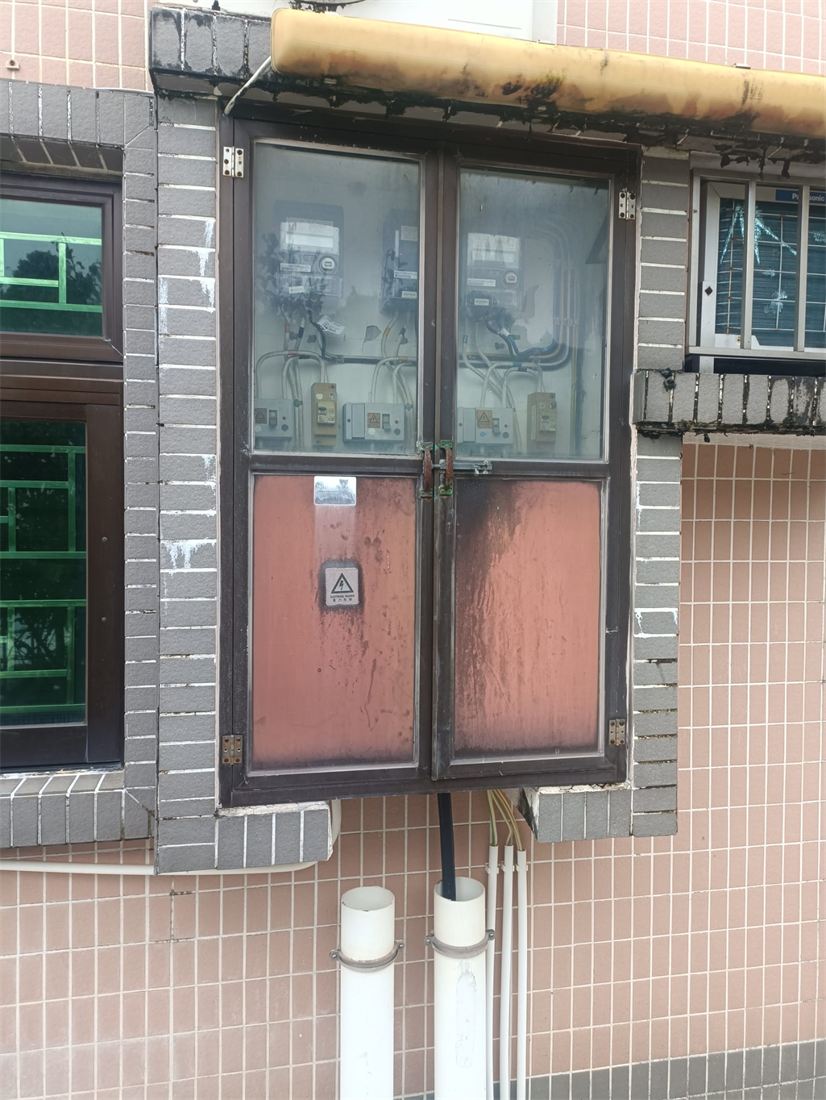 典型的村屋屋外電錶櫃。每戶一個單相電錶,每個電錶只接一組火線/中性線,下面一個保險絲座。
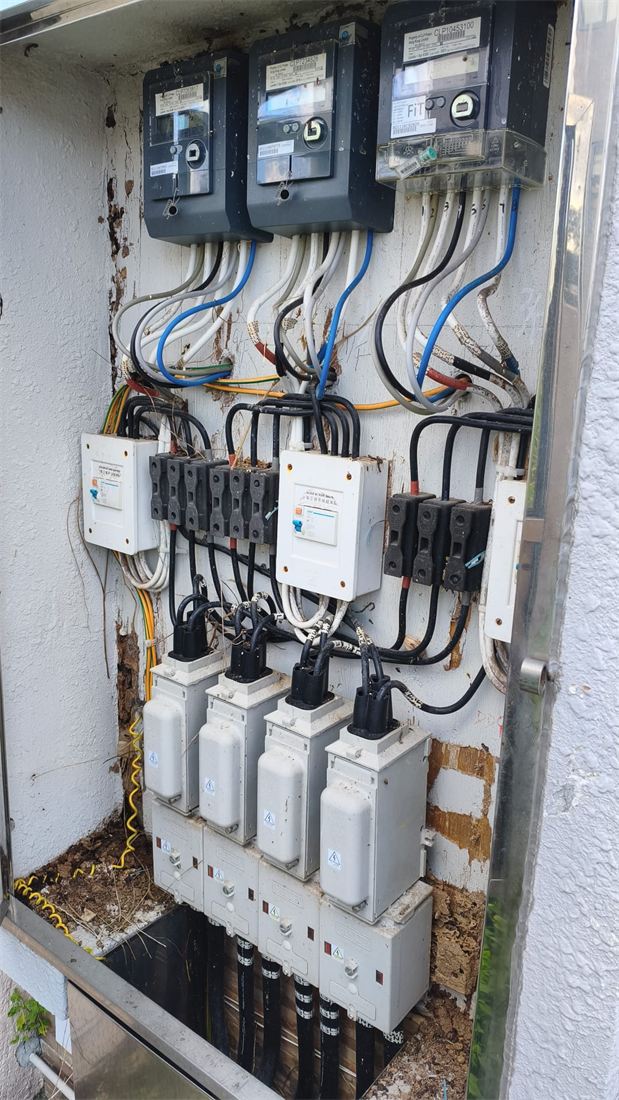 三相供電的分別一眼看得出:三條火線分開走,保險絲座及刀掣成組出現,不是單獨一個。