中電電動車住宅分時段電價:夜晚充電,每度平 43 仙CLP's residential EV time-of-use tariff: 43 cents a unit cheaper at night
中電「電動車住宅分時段用電價目」非高峰每度 94.5 港仙,高峰每度 137.5 港仙,相差 43 港仙。非高峰時段由晚上 11 時到翌日下午 4 時,長達 17 小時 —— 你本身瞓覺嗰段時間全部包括在內。用延遲充電設定,慳這筆錢不需要改變任何習慣。CLP's residential EV time-of-use tariff charges 94.5 HK cents per unit off-peak against 137.5 on-peak — a 43-cent gap. Off-peak runs 11pm to 4pm the next day, seventeen hours that already contain the whole time you're asleep. A delay timer collects the difference without changing anything you do.
The same unit of electricity can cost 43 cents more at four in the afternoon than it does at midnight. That's not a promotion or a membership scheme — it's how CLP's residential EV time-of-use tariff is structured.
Two windows, two prices, 43 cents apart — roughly a third.
The two windows
Window
Daily hours
Per unit
Off-peak
11pm – 4pm next day (17 hours)
94.5 HK cents
On-peak
4pm – 11pm (7 hours)
137.5 HK cents
Note the length: off-peak runs seventeen hours, more than twice the on-peak window. Getting home, dinner, sleeping, the morning commute — most of that day already sits inside it.
Figures are from CLP's published tariff and exclude the fuel cost adjustment and other charges. Your bill and CLP's current published terms govern.
What it's worth over a month
At 300 units a month — roughly 1,500 to 2,000 km of driving:
Charging entirely in this window
Monthly
On-peak (4pm – 11pm)
$412.50
Off-peak (11pm – 4pm)
$283.50
Difference
$129
$1,548 a year, and it comes from moving the charging, not from doing less of it.
The catch: you get home during the expensive window
Most people plug in between 7pm and 10pm — squarely inside the on-peak window. Plug in and charge straight away, and you've used the most expensive seven hours of the day in full.
There are only two ways around it: go back down at 11pm and plug in, or have the charger wait for you.
Carparks with no network (basements, older estates, dead spots)
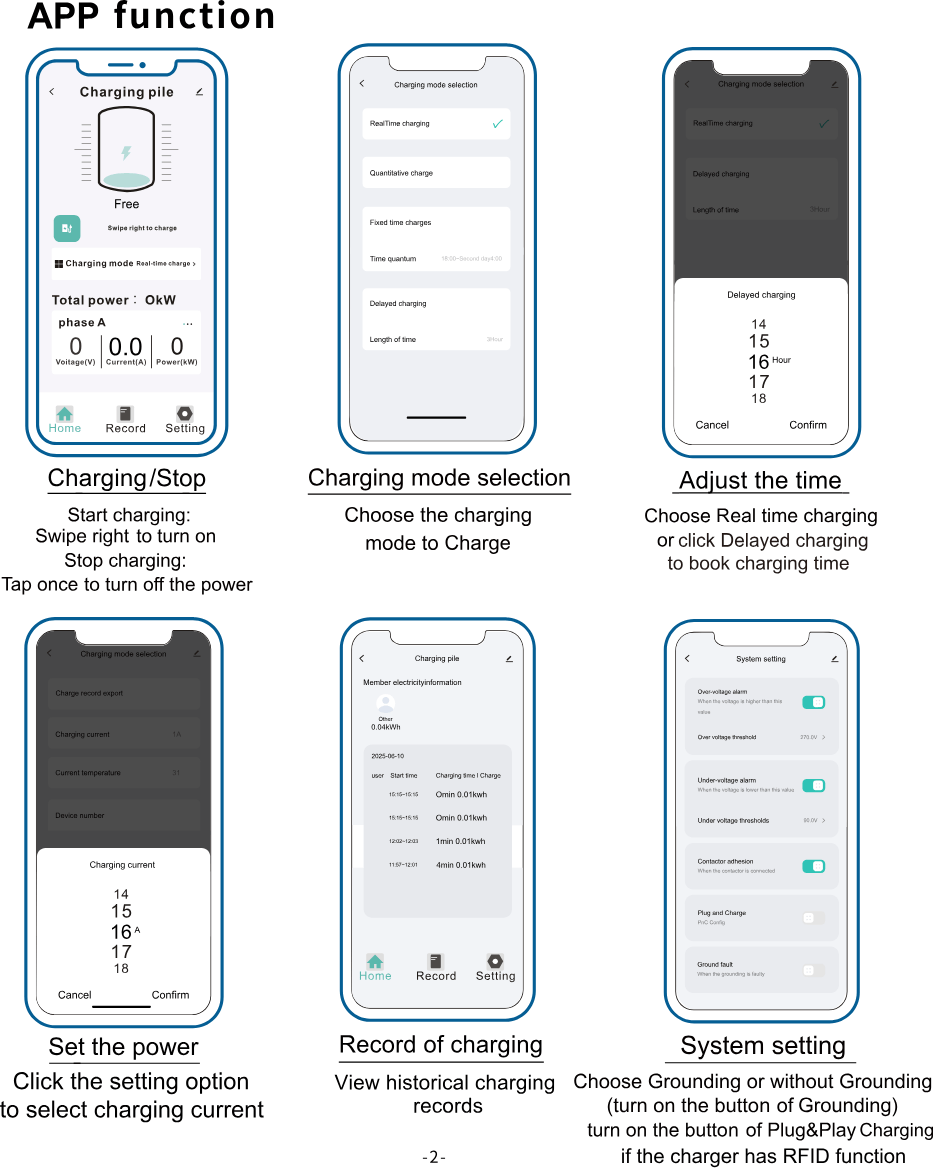
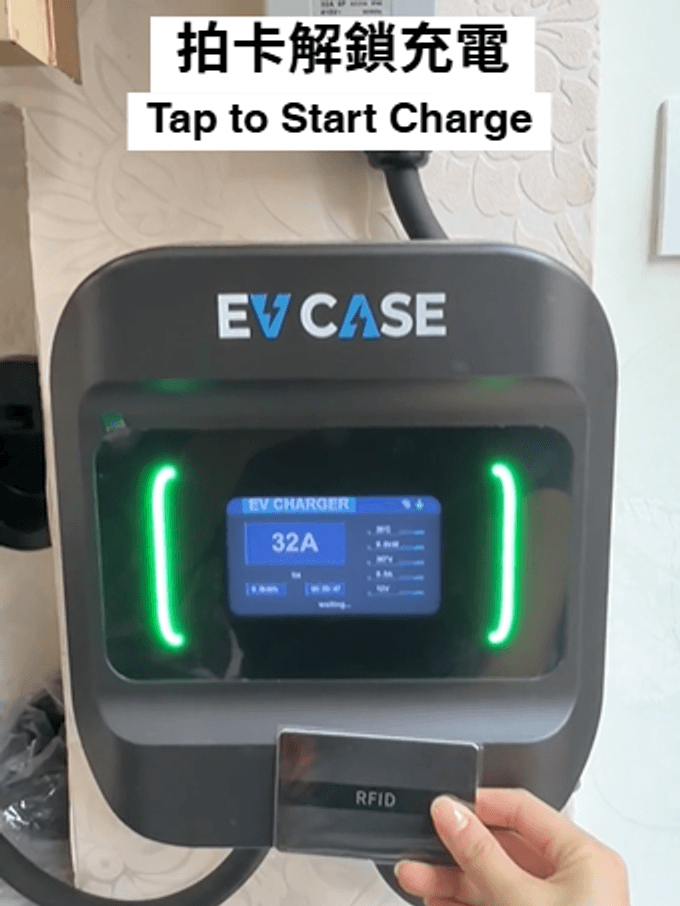
A button on the side of the unit delays the start by 1 to 12 hours. Home at 7pm, four presses, and charging starts at 11 on its own — no network, no phone. Each unit ships with two RFID cards for unlocking.
Set the delay and the schedule from the app, change it whenever, without going down to the bay.
Both routes save exactly the same money. The only question is whether your bay has a signal — which is something we check during the site survey anyway.
Five eligibility conditions
All of these have to hold:
An e-mobility electricity account with a dedicated meter for the charging equipment;
The equipment is in a residential carpark;
Private use only, not commercial;
Good wireless signal where the smart meter sits;
Agreement to keep the smart meter enabled on an ongoing basis.
The first one is the real gate: no dedicated meter, no time-of-use tariff. If your bay is billed through the estate's common meter, the time you charge makes no difference at all.
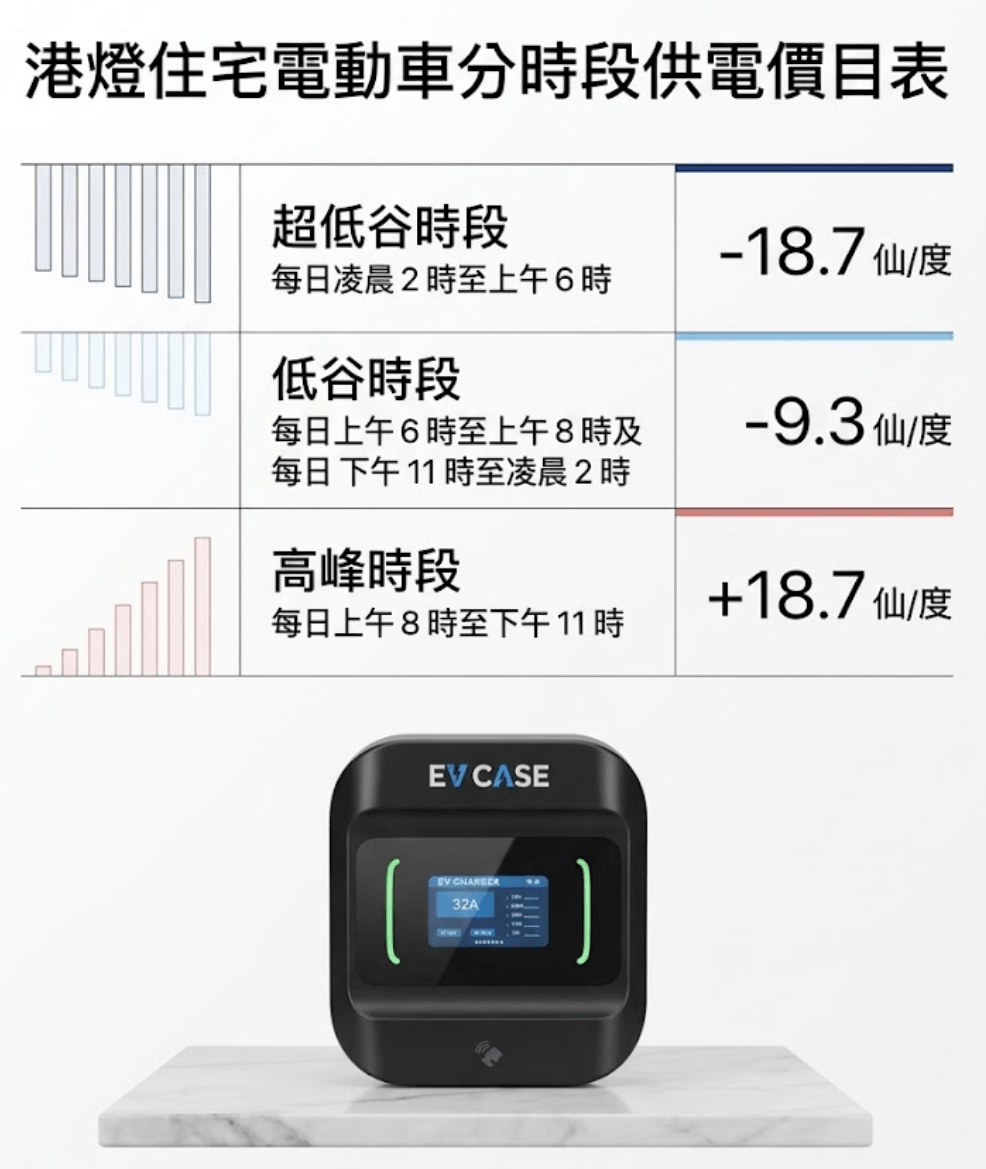
Hong Kong Island, Ap Lei Chau and Lamma are HK Electric territory, and the structure there is different — rebates and surcharges applied to the standard tariff, with the deepest discount lasting only four hours. See HK Electric's residential EV time-of-use tariff.
Three steps
Find out whether you have a dedicated meter. If not, that's the whole job — start there.
Install a charger that can delay its start. Not all of them can; without it, saving the money means going down to the bay at night.
Apply to CLP for the time-of-use tariff. It takes effect from the next billing cycle.
We handle the first two outright, and walk you through the third field by field. Send us photos of the bay and the meter on WhatsApp and we'll tell you which step you're stuck on.
有問題想查詢?Got a question?
不一定要幫襯才可以查詢。傳送你的情況給我們,我們一樣會回答。You don't have to be a customer to ask. Send us your situation and we'll answer anyway.

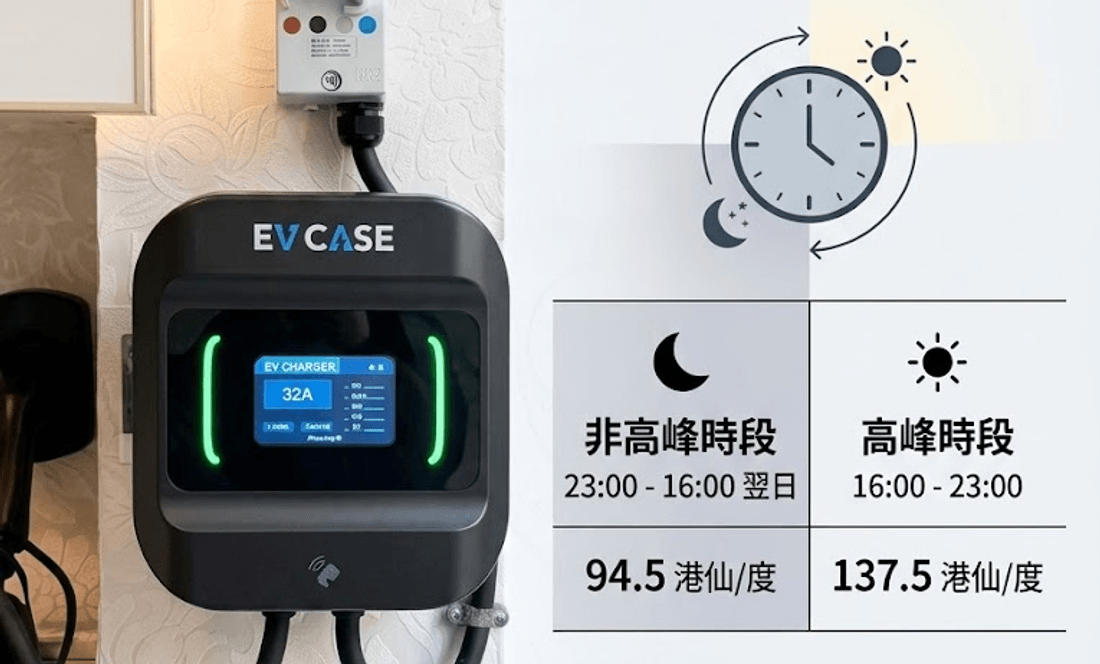 兩個時段,兩個價錢。中間相差 43 港仙,即係約三成。